Bachianas Brasileiras Guitar Pdf Books
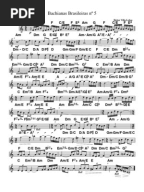
5 sheet music, music books, music scores & more at Sheet Music Plus, the World's Largest Selection of Sheet Music. Bachianas Brasileiras No. Guitar, Vocal - Difficulty: medium-difficult. Voice and Guitar. Composed by Heitor Villa-Lobos (1887-1959). Piano/Vocal/Guitar (chords only). Description: Villa Lobos - Aria From Bachianas Brasileiras No. 5 for Flute and Guitar (Score). Villa Lobos - Aria From Bachianas Brasileiras No. 5 for Flute and Guitar (Score). Copyright: Attribution Non-Commercial (BY-NC). Download as PDF, TXT or read online from Scribd. Flag for inappropriate content.
definition - Bachianas Brasileiras
definition of Wikipedia
Wikipedia
The Bachianas Brasileiras (Portuguese pronunciation: [bakiˈɐ̃nɐz bɾaziˈlejɾɐs]) are a series of nine suites by the Brazilian composer Heitor Villa-Lobos, written for various combinations of instruments and voices between 1930 and 1945. They represent not so much a fusion of Brazilian folk and popular music on the one hand, and the style of Johann Sebastian Bach on the other, as an attempt freely to adapt a number of Baroqueharmonic and contrapuntal procedures to Brazilian music (Béhague 1994, 106; Béhague 2001). Most of the movements in each suite have two titles: one 'Bachian' (Preludio, Fuga, etc.), the other Brazilian (Embolada, O canto da nossa terra, etc.).
Bachianas Brasileiras No. 1[edit]
Scored for orchestra of cellos (1930). Dedicated to Pablo Casals.

- Introdução (Embolada (pt))
- Prelúdio (Modinha)
- Fuga (Conversa) (Conversation)
Bachianas Brasileiras No. 2[edit]
Scored for orchestra (1930). There are four movements. According to one opinion, the third movement later transcribed for piano, and the others for cello and piano (Appleby 1988, 64–65); according to another, it was the other way around: three pieces for cello and piano and a solo piano piece, none of them connected with each other and none of them originally with any Bach associations, were brought together and scored for chamber orchestra (Peppercorn 1991, 103).
- Preludio (O canto do capadocio) [Despite the five translations—French, English, Italian, Spanish, and German—printed in the score, the composer's own notes on this movement make it clear that the meaning of capadocio is not 'campagnard', 'countryman', 'campagnolo', etc., but rather 'Teddy boy' or 'layabout' (Round 1989, 39).]
- Aria (O canto da nossa terra)
- Dansa (Lembrança do Sertão) (Memento of the Sertão)
- Toccata (O trenzinho [misspelled in the score: 'tremzinho'] do caipira: The Little Train of the Caipira; 'caipira' meaning the man from the country, or small town, a 'hick' but without the negative connotation.[citation needed]
This work is scored for flute, oboe, clarinet, tenor and baritone saxophones, bassoon, contrabassoon, 2 horns, trombone, timpani, ganzá, chocalho, pandeira, reco, matraca, caixa, triangle, cymbals, tam-tam, bass drum, celesta, piano, and strings.
Bachianas Brasileiras No. 3[edit]
Scored for piano and orchestra (1938)
- Prelúdio (Ponteio)
- Fantasia (Devaneio) (Digression)
- Ária (Modinha)
- Toccata (Picapau) (Woodpecker)
The orchestral forces for this work, in addition to the solo piano, are: Piccolo, 2 flutes, 2 oboes, cor anglais, 2 clarinets, bass clarinet, 2 bassoons, contrabassoon, 4 horns, 2 trumpets, 4 trombones, tuba, timpani, bass drum, tam-tam, xylophone, and strings.
Bachianas Brasileiras No. 4[edit]
Scored for piano (1930–41); orchestrated in 1942 (Preludio dedicated to Tomas Terán; Coral dedicated to José Vieira Brandão (pt); Ária dedicated to Sylvio Salema (pt); Dança dedicated to Antonieta Rudge Müller)
- Prelúdio (Introdução)
- Coral (Canto do Sertão)
- Ária (Cantiga)
- Danza (Mindinho)[citation needed] ['little finger', but spelled Miudinho (pt) (a type of dance, the word itself meaning 'choosy', 'niggling') on p. 45 of the orchestra score, in Villa-Lobos 1974, 190, and, twice in the piano version and once for the orchestral version, in Villa-Lobos 2009, 14–15.]
The orchestral version is scored for piccolo, 2 flutes, 2 oboes, cor anglais, 2 clarinets, bass clarinets, 2 bassoons, contrabassoon, 4 horns, 3 trumpets, 3 trombones, tuba, timpani, bass drum, tam-tam, xylophone, celesta, and strings. The first movement (Prelúdio) is scored for strings alone.
Bachianas Brasileiras No. 5[edit]
Scored for soprano and orchestra of cellos (1938/45).
- Ária (Cantilena) (lyrics by Ruth V. Corrêa) (Later arranged for solo soprano with guitar accompaniment by Villa-Lobos). This Aria is Villa-Lobos's best-known work (Béhague 2001).
Bachianas Brasileiras #5 Pdf
– Text in Portuguese: http://lyricstranslate.com/en/Hayley-Westenra-Bachianas-Brasileiras-No5-Aria-Cantilena-lyrics.html Tarde, uma nuve rósea lenta e transparente. / sobre o espaço, sonhadora e bela! / Surge no infinito a lua docemente, / enfeitando a tarde, qual meiga donzela / que se apresta e a linda sonhadoramente, / em anseios d'alma para ficar bela / grita ao céu e a terra, toda a Natureza! / / Cala a passarada aos seus tristes queixumes / e reflete o mar toda a Sua riqueza... / Suave a luz da lua desperta agora / a cruel saudade que ri e chora! / Tarde, uma nuvem rósea lenta e transparente / sobre o espaço, sonhadora e bela!
– Text in English translation: http://lyricstranslate.com/en/bachianas-brasileiras-no5-aria-cantilena-brasilian-scales-minor-no5-aria-chant.html#ixzz449ecYgnX Eventide, a rosy cloud, slow and transparent / over the spot, dreamlike and beautiful! / The moon gently appearing beyond the horizon, / embellishing the eventide, like a sweet maid / preparing herself till she's dreamily gorgeous, / with her soul avid to become beautiful / yelling crying to heaven and earth, to all of Nature! / / Silent are the birds to her sad laments / and reflected on the sea all of Her richness... / Soft the light of the moon awakes already / a fierce desire that laughs and cries. / Eventide, a rosy cloud, slow and transparent / over the spot, dreamlike and beautiful!
- Dança (Martelo) (lyrics by Manuel Bandeira)
– Text in Portuguese: Irerê, meu passarinho
Do sertão do cariri,
Irerê, meu companheiro,
Cade viola? Cadê meu bem? Cadê maria? Ai triste sorte a do violeiro cantadô! Sem a viola em que cantava o seu amô, Seu assobio é tua flauta de irerê: Que tua flauta do sertão quando assobia, A gente sofre sem querê! Teu canto chega lá do fundo do sertão Como uma brisa amolecendo o coração. Irerê, solta teu canto! Canta mais! Canta mais! Pra alembrá o cariri! Canta, cambaxirra! Canta, juriti! Canta, irerê! Canta, canta, sofrê! Patativa! Bem-te-vi! Maria-acorda-que-é-dia! Cantem, todos vocês, Passarinhos do sertão! Bem-te-vi! Eh sabiá! Lá! Liá! liá! liá! liá! liá! Eh sabiá da mata cantadô! Lá! Liá! liá! liá! Lá! Liá! liá! liá! liá! liá! Eh sabiá da mata sofredô! O vosso canto vem do fundo do sertão Como uma brisa amolecendo o coração.
–Text in English translation. The poet addresses a variety of birds, who recall to him his home in Cariri Irere, my little nestling from the wilds of Cariri, Irere, my loved companion! Where is my guitar?
Where is my sweetheart? Where is Maria?
Ah, sorry is the lot of him who fain would sing!
Ah! without his lute no song of gladness can he bring,
Ah! his whistle shrill must be his flute for Irere.
But yours the flute that once in forest wilds was sounding, Ah! with its message of grief and woe.
Ah! your song came forth from out the depths of forest wilds, Ah, like summer winds that comfort ev'ry mournful heart,
Ah, Ah! Irere, Sing and enchant me!
Sing more, sing more!
To remember Cariri!
Sing; my lovely song-bird, sing your song again,
sing; my Irere: sing of pain and sorrow,
As the birds of morning wake Maria in the dawning.
Sing with all your voices,
Brios of the woods and the wilds,
Sing your songs! ye forest Birds!
La! lia! lia! lia! lia! lia!
Ye nestlings of the singing forest wilds.
Lia! lia! lia! lia!
La! lia! lia! lia! lia! lia!
Ye nestlings of the mornful forest
Oh, yours the song that comes from the depths of forest wilds like summer winds that comfort ev'ry mournful heart.
Irere, my little nestling from the wilds of Cariri,
Irere, my loved companion, my singing sweetheart,
where goes my dear? Where goes Maria?
Ah, sorry is the lot of him who fain would sing!
Ah! without his lute no song of gladness can he bring,
Ah! his whistle shrill must be his flute for Irere,
but yours the flute that once in forest wilds was sounding, Ah! with its message of grief and woe.
Ah! your song came forth from out the depths of forest wilds! Ah! like summer winds that comfort ev'ry mournful heart,
Ah! Ah! Irere, Sing and enchant me!
Sing more, sing more! To remember Cariri!
Bachianas Brasileiras No. 6[edit]
Scored for flute and bassoon (1938)
- Ária (Chôro)
- Fantasia
Bachianas Brasileiras No. 7[edit]
Scored for symphony orchestra (1942) (dedicated to Gustavo Capanevia)
- Prelúdio (Ponteio)
- Giga (Quadrilha caipira)
- Tocata (Desafio (pt)) (Dare)
- Fuga (Conversa)
This work is scored for piccolo, 2 flutes, 2 oboes, cor anglais, 2 clarinets, bass clarinet, 2 bassoons, contrabassoon, 4 horns, 3 trumpets, 4 trombones, tuba, timpani, tam-tam, xylophone, coconut shell, bass drum, celesta, harp and strings.
Bachianas Brasileiras No. 8[edit]
Scored for symphony orchestra (1944) (dedicated to Mindinha)
- Prelúdio
- Ária (Modinha)
- Tocata (Catira batida)
- Fuga (Also arranged for four-part a cappella choir.)
This work is scored for piccolo, 2 flutes, 2 oboes, cor anglais, 2 clarinets, bass clarinet, 2 bassoons, contrabassoon, 4 horns, 4 trumpets, 4 trombones, tuba, timpani, tam-tam, xylophone, 3 wood blocks (high, medium and low), tarol, bass drum, celesta, and strings.
Bachianas Brasileiras No. 9[edit]
Scored for chorus or string orchestra (1945)
- Prélude
- Fugue
Ambiguities in the scores[edit]
Because Villa-Lobos dashed off compositions in feverish haste and preferred writing new pieces to revising and correcting already completed ones, numerous slips of the pen, miscalculations, impracticalities or even impossibilities, imprecise notations, uncertainty in specification of instruments, and other problems inescapably remain in the printed scores of the Bachianas, and require performers to take unusual care to decipher what the composer actually intended. In the frequent cases where both the score and the parts are wrong, the recordings made by the composer are the only means of determining what he actually intended (Round 1989, 35).
Bachianas Brasileiras #5 Translation
Recordings[edit]
Villa-Lobos made a number of recordings of the Bachianas Brasileiras, including an integral recording of all nine compositions made in Paris for EMI in the 1950s, with the French National Orchestra and Victoria de los Ángeles as the soprano soloist in the no. 5. These landmark recordings were issued in several configurations on LP, and were later reissued on CD. Other musicians, including Joan Baez, Enrique Bátiz, Leonard Bernstein, Nelson Freire, Werner Janssen, Isaac Karabtchevsky, Jesús López-Cobos, Aldo Parisot, Menahem Pressler, Mstislav Rostropovich, Kenneth Schermerhorn, Felix Slatkin, Leopold Stokowski, Michael Tilson Thomas, and Galina Vishnevskaya have subsequently recorded some or all of the music.
See also[edit]
- -ana, for other musical works using the suffix '-ana' to pay homage to another composer
Bachianas Brasileiras #9
References[edit]
- Appleby, David P. 1988. Heitor Villa-Lobos: A Bio-Bibliography. Bio-Bibliographies in Music 9. New York, Westport, and London: Greenwood Press. ISBN0-313-25346-3.
- Béhague, Gerard. 1994. Heitor Villa-Lobos: The Search for Brazil's Musical Soul. ILAS Special Publication. Austin: Institute of Latin American Studies, University of Texas at Austin. ISBN0-292-70823-8.
- Béhague, Gerard. 2001. 'Villa-Lobos, Heitor'. The New Grove Dictionary of Music and Musicians, second edition, edited by Stanley Sadie and John Tyrrell. London: Macmillan Publishers.
- Peppercorn, Lisa M. 1991. Villa-Lobos: The Music: An Analysis of His Style, translated by Stefan de Haan. London: Kahn & Averill; White Plains, NY: Pro/Am Music Resources Inc. ISBN1-871082-15-3 (Kahn & Averill); ISBN0-912483-36-9.
- Round, Michael. 1989. 'Bachianas Brasileiras in Performance'. Tempo, new series, no. 169 (June, '50th Anniversary 1939–1989'): 34–41.
- Villa-Lobos, Heitor. 1974. 'Bachianas brasileiras (Estudo de H. Villa-Lobos)' [from a manuscript dated 'Rio, 4 May 1947']. In Villa-Lobos, sua obra, second edition, edited by Programa de Ação Cultural, 187–97. Rio de Janeiro: MEC, DAC, Museu Villa-Lobos.
- Villa-Lobos, sua obra. 2009. Version 1.0. MinC / IBRAM, and the Museu Villa-Lobos. Based on the third edition, 1989.
Further reading[edit]
- Arcanjo, Loque. 2008. O ritmo da mistura e o compasso da história: o modernismo musical nas Bachianas Brasileiras de Heitor Villa-Lobos. Rio de Janeiro: E-papers. ISBN978-85-7650-164-0.
- Nóbrega, Adhemar. 1976. As Bachianas brasileiras de Villa-Lobos, second edition. Rio de Janeiro: Museu Villa-Lobos.
- Palma, Enos da Costa, and Edgard de Brito Chaves Júnior. 1971. As Bachianas brasileiras de Villa-Lobos. Rio de Janeiro: Companhia Editôra Americana.
This entry is from Wikipedia, the leading user-contributed encyclopedia. It may not have been reviewed by professional editors (see full disclaimer)